Introduction
One of the main reasons homeowners invest in solar photovoltaic systems is the chance to generate their own renewable electricity and reduce reliance on grid-purchased energy. These financial benefits depend heavily on the system continuing to operate efficiently over time. While solar installations are designed for long-term performance, developing faults, component ageing, environmental conditions, or changes in system efficiency can gradually affect electricity generation. Professional support from the team at ServiceMy can help homeowners understand how their installation is performing, identify potential concerns, and protect the energy savings their solar investment was designed to deliver.
A solar PV system doesn’t need to stop working completely for homeowners to lose potential savings. Even a gradual decline in generation can mean purchasing additional electricity from the grid. Regular professional assessments help identify performance changes earlier and build confidence in the installation’s long-term efficiency.
Solar Savings Depend on Consistent Performance
The financial benefit of a solar PV system is closely connected to the amount of usable electricity it generates. When the installation performs effectively, homeowners can use more solar-generated electricity within the property and reduce the amount they need to purchase from their electricity supplier.
If system efficiency falls, these benefits may gradually decrease. The difference may not always be immediately obvious because the panels could continue generating electricity, just at a lower level than expected.
Maintaining consistent performance is therefore an important part of protecting a solar installation’s financial value. Professional checks can help establish whether the system is operating as expected and whether any areas require further attention.
Reduced Performance Is Not Always Obvious
A complete solar PV failure is generally easier to recognise than a gradual performance problem. When an installation stops generating electricity altogether, monitoring information or system indicators may quickly alert the homeowner.
Partial performance loss can be more difficult to identify.
Solar generation naturally changes throughout the year, making it easy to assume that lower output is caused by cloudy weather, shorter daylight hours, or seasonal variation. While these factors certainly affect generation, they can also make underlying efficiency problems less noticeable.
A professional assessment provides additional insight when homeowners are unsure whether changes in generation are normal or require investigation.
Professional Checks Look Beyond the Panels
When thinking about solar performance, homeowners often focus primarily on the panels installed on the roof. However, a solar PV installation consists of several components working together.
The inverter, electrical connections, mounting arrangements, monitoring equipment, and associated components can all influence overall performance.
A professional system assessment can consider the installation more broadly rather than assuming the panels are responsible for every change in generation.
This whole-system approach matters because an installation may look normal while a less obvious component affects performance.
Inverter Performance Can Influence Energy Savings
The inverter performs an essential role by converting the electricity generated by solar panels into electricity that can be used within the home.
Problems affecting inverter performance may therefore reduce the practical benefit homeowners receive from their installation.
Changes may sometimes come with warning indicators or monitoring notifications, but other performance differences may require further investigation.
Including the inverter within professional system checks helps ensure an important part of the installation is not overlooked when assessing long-term performance.
Identifying Developing Issues Earlier
Preventative attention can be particularly valuable with long-term household systems.
Small issues may initially have only a limited impact, but letting them go unnoticed can lead to prolonged periods of reduced performance.
Professional checks help identify potential concerns before they become more significant.
Where appropriate, homeowners can then make informed decisions about maintenance or further investigation rather than waiting for a more noticeable problem to occur.
Early identification can also help prevent unnecessary loss of renewable electricity generation.
Protecting Against Unnecessary Grid Dependence
When a solar PV installation generates less electricity than expected, households may need to draw additional power from the grid.
The financial impact will depend on household consumption, electricity prices, system size, generation levels, and several other factors. Nevertheless, maintaining efficient solar generation helps homeowners make better use of the renewable energy infrastructure already installed at their property.
Regular checks can therefore support the original financial objective behind many residential solar installations: generating more electricity at home and reducing dependence on externally supplied energy.
Understanding Changes in Energy Generation
Professional solar PV checks can also help provide context when generation patterns begin to change.
Lower output does not automatically indicate a system fault. Weather, seasonal daylight, temperature, shading, and household circumstances can all influence the performance figures homeowners see.
However, unexplained or sustained changes deserve attention.
Having a professional assess the system can help homeowners determine whether generation differences match normal conditions or whether another factor is affecting performance.
This reduces uncertainty and supports better long-term system management.
Supporting the Long-Term Return on Investment
Solar PV should be considered a long-term investment rather than simply a household purchase.
The value of that investment is realised over many years through renewable electricity generation and reduced reliance on grid energy.
Maintaining system performance therefore helps protect the return homeowners expect from their original installation.
Regular checks can support reliability, identify potential efficiency issues, and help homeowners stay more aware of the overall system condition.
The objective is not simply to prevent faults but to help the installation continue providing value throughout its useful life.
Better Information Supports Better Maintenance Decisions
Without accurate information, homeowners may struggle to know when their solar PV system genuinely needs attention.
Unnecessary maintenance adds expense, while ignoring real performance issues can reduce long-term savings.
A professional assessment gives homeowners better information about their system’s condition.
This lets maintenance decisions be based on the installation’s actual performance and condition rather than assumptions.
An informed approach can make solar PV ownership easier to manage while helping homeowners plan future maintenance more effectively.
Maintaining Records Can Improve Long-Term Management
Homeowners can also support professional system management by retaining useful information about their solar installation.
Records of previous checks, maintenance activities, repairs, inverter changes, and historical generation can provide valuable context when investigating future performance concerns.
Comparing current information with previous records may make long-term trends easier to understand.
A well-documented system history also improves visibility as the installation ages and maintenance needs evolve.
Professional Checks Support Peace of Mind
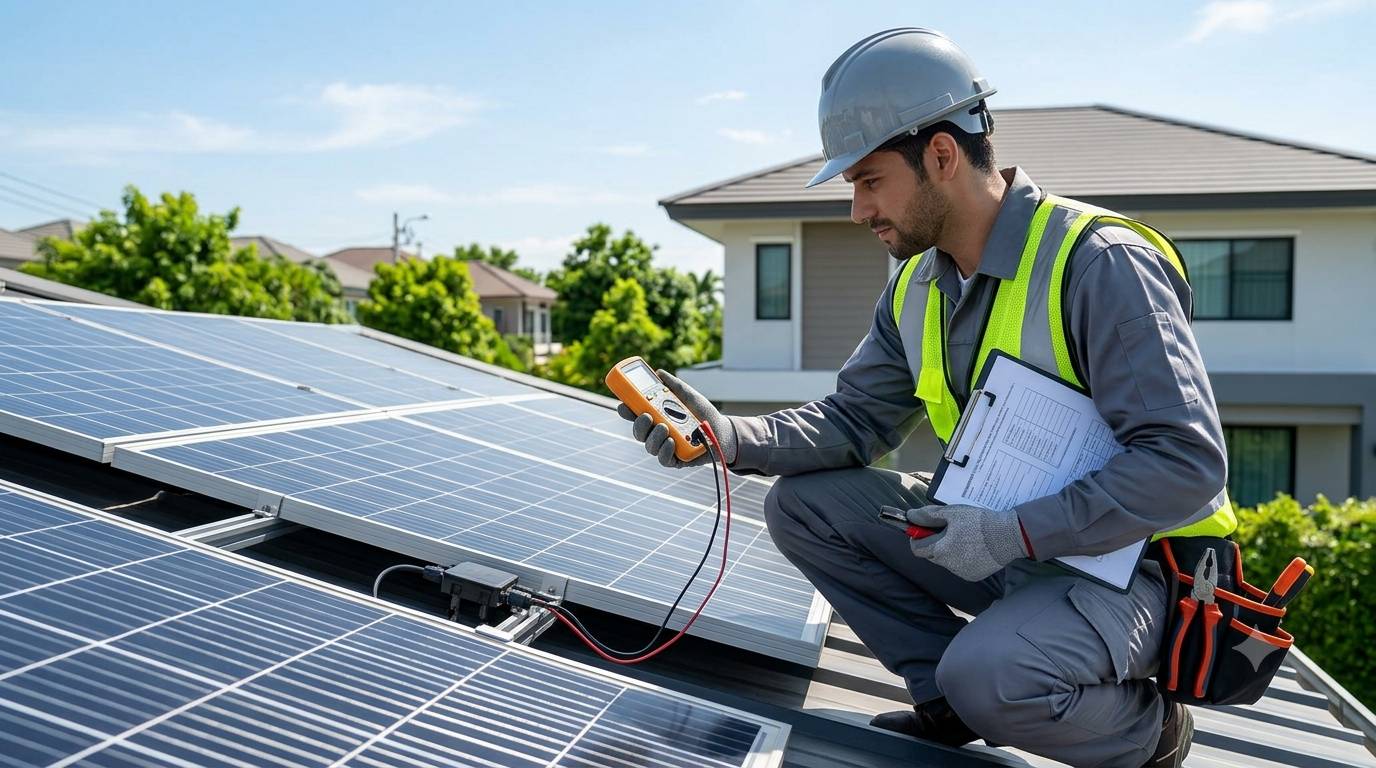
Solar panels are often installed in locations that are difficult for homeowners to inspect closely, particularly on rooftops.
Trying to investigate technical or electrical components without appropriate expertise can create unnecessary safety risks.
Professional checks offer a safer way to understand an installation’s condition.
Knowing that key system components have been appropriately assessed can provide reassurance while allowing homeowners to focus on monitoring energy generation and enjoying the benefits of renewable electricity.
Protecting Both Financial and Environmental Benefits
The benefits of efficient solar PV extend beyond household finances.
Every unit of electricity generated through the installation contributes to the property’s use of renewable energy. Maintaining strong system performance therefore supports both financial savings and environmental objectives.
When a system operates below its potential unnecessarily, homeowners may lose some of both benefits.
Professional assessment helps identify and investigate performance concerns, supporting the system’s long-term value from both an economic and sustainability perspective.
Frequently Asked Questions (FAQs)
How can professional solar PV checks protect energy savings?
They can help identify performance issues that may reduce electricity generation and increase reliance on grid energy.
Can solar panels still work when the system has a performance issue?
Yes. Some problems may reduce efficiency without stopping the entire system from generating electricity.
Why is the inverter important for solar savings?
The inverter converts electricity generated by the panels into electricity suitable for household use, making its performance important to the overall system.
Should homeowners monitor their solar electricity generation?
Regular monitoring helps homeowners spot unusual or sustained performance changes that may need further investigation.
Are professional checks only necessary when solar panels stop working?
No. Preventative assessment can help identify developing issues before they result in more significant performance loss.
Conclusion
Professional solar PV checks can play an important role in protecting the long-term financial benefits of residential solar energy. By assessing overall system condition, investigating unexpected performance changes, and identifying developing concerns, professional inspections help homeowners maintain greater confidence in their renewable energy investment.
Consistent solar generation helps reduce dependence on grid electricity while supporting the long-term return on the original installation. A proactive approach to system performance helps homeowners protect their energy savings while continuing to benefit from reliable renewable electricity for years to come.